Archive

Archive for the ‘Clutter Free Marketing’ Category

WeMedia ’09: Community Values

February 17th, 2009 No comments

I am excited to be in planning mode with my co-presenters for an upcoming workshop at WeMedia ’09 next week in Miami.

WeMedia Miami '09

BlogTalkRadio’s John Havens, Divine Caroline‘s Suha Araj, the Washington Times‘ Chuck DeFeo and I will be leading a workshop on growing community in a variety of different business contexts.   While prepping for this, I started thinking more about Mack Collier’s thoughts about Why Your Community Building Efforts Aren’t Working.   In this post, he hits on the disconnect between what most companies want (to market) and what their customers do not want from a community (to be marketed to).

So what is a brand marketer, digital strategist, or even a brand FAN to do to cross this chasm?  To address this in the positive, I want to quote another great thinker in the space – the head of creative for Ogilvy Interactive Jan Leth.  In a recent presentation on the future of advertising, he discusses the new organizing principle for brands and communities: Value Exchange

“The key to engagement with consumers is reciprocity or “value exchange”.  Consumers must get entertainment, utility, or information out of their engagement.”

So begin not by thinking about what you can “get” from your customers in a social media environment, but what you can provide them.  This could be great stories, the chance to know things first or you could simply be providing them with the utility of a place to congregate and talk amongst themselves.  The key is in the audience centric approach.   This same principle (the JFK “Ask Not…” principle) applies to any strategy involving blogger outreach as well.

My one potential addition to the list of ways to provide value through entertainment, utility, or information is validation.  I believe that a brand demonstrating it is listening and human, even when it can not change or solve a business issue, can drive loyalty and continued community.  Projects like MyStarbucksIdea and Ideastorm demonstrate this on a large scale – thousands of ideas, only a few of which make it into the business model, but all with their day in front of the brand and to be judged up or down the priority list by the court of public opinion.  Validation has emotional value only, but people will keep coming back for it.

For those unable to join in Miami, I’ll publish our collective list of killer community growth principles later next week.

Harry & David Gets It

February 8th, 2009 1 comment

…recession retail marketing that is.  On Friday, I was lucky enough to come home to this:

It also came with a beautiful matching Valentine card.  Totally totally unnecessary, but lovely – like all of Harry & David’s gourmet gifts.  I haven’t actually sent a gift from H&D since before I was married and changed my name, so I am sure I popped up in their database as a new name.

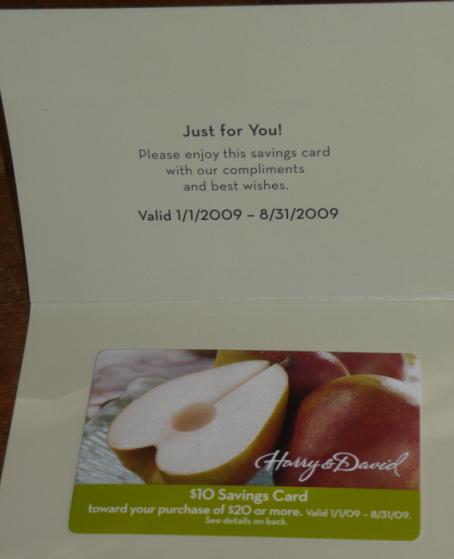
Whether its because of this or the beating they have been taking due to the economy, they also included a truly compelling offer:

This is an offer so good that it has already driven me to their website to peruse options for my $10 off $20 savings card.  Do they make any money off of this?  I have no idea, but this is certainly an offer worth talking about and something that will drive trial.

I’m off to devour fabulously delicious pear.

LIVESTRONG Around the World

January 26th, 2009 No comments

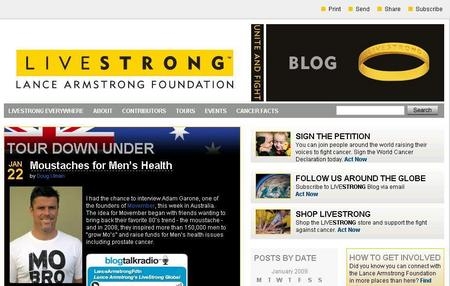
If you have any curiosity of what I’ve been up to while I”ve been AWOL here for two weeks, I invite you to check out my post on the 360 Digital Influence blog about the work that Ogilvy has been lucky enough to begin with the Lance Armstrong Foundation in taking their LIVESTRONG movement global. The first piece of this, the livestrongblog revamped as a social media platform, is now live and inviting your participation!  Check it out.

Check back soon for the return of Brands Worthy of a Weekend where I’ll be featuring the inspiring Italian coffee company Illy.

Emails & Reviews for Christmas ’08

December 8th, 2008 1 comment

My Inbox is under siege!

Retailers, desperate to make hay with what is left of the holiday shopping season, have attempted to take our relationships from a really casual “hey, see you around!” level to trying to get me in the sack (without buying me a drink) seemingly overnight.  Frequency of emails has increased, drain-circling discounts have been framed as everything from private promos to secret sales, then there’s the “exclusive product” strategy such as the Hard Rock Cafe’s email about their new goth punk Barbie (To all those who have been searching for something to get that angry teenager on your list: you’re welcome).

While I have spent gobs of money online, none as been the result of any one of these emails.  The ONLY thing these emails have inspired me to do, actually, is go to the trouble of unsubscribing.  When you email me once a month, i delete; once a day, I unsubscribe.  Has the desperation of the recession officially forced retail email to jump the shark?

When I have been shopping for gifts, I have relied heavily on ratings and reviews.  When asked to purchase a gift in a category on which I’m a novice, I hesitated to buy a toy that was new to the market explicitly because that meant it had no ratings.   Conversely, on Sephora.com I was shocked to see not just the ratings and reviews, but contextual data.  In addition to comments and ratings, the site captures the age range, skin type, and eye color of the rater.  Once I saw a particularly divisive set of ratings (1 star vs. 5 stars), I was able to find the most relevant opinions and weigh those more seriously.

So, in the course of 3ish years, ratings have gone from an interesting oddity to an absolute e-commerce decision necessity.  And email has gone from a great way to get reminders from my favorite stores to unsubscribe breakups.  Maybe this is the silver lining of the recession?!

My Christmas wish is that email marketing clutter will lose its efficiency and be rethought in the marketing mix and retailers that empower recommendations and connections between customers will be rewarded with solid Q4 revenue.  Or at least that’s my marketing Christmas wish.  Like a good beauty queen, I’m still planning to ask Santa for World Peace.

Categories: Clutter Free Marketing Tags:

The Netflix Prize & Modeling Influence

December 1st, 2008 No comments

Last week, the NY Times published a great article about the leaders in the almost 2-year-in contest to create a computer algorithm that improves upon the ability of Netflix’ Cinematch engine to make accurate recommendations of what you’ll like by 10%.   Competition is hot because the prize is a whopping $1million, but the progress of all of the teams seem to be stalled based on an inability to predict how you’ll like a small handful of polarizing indie movies – most notably Napoleon Dynamite.

So, what makes indies so hard to predict?   Influence!   While recommendation engines are built on the assumption that your taste stays the same, our “tastes” are constantly morphing based on the opinions and information we hear from those around us.

“…the reality is that our cultural tastes evolve, and they change in part because we interact with others. You hear your friends gushing about “Mad Men,” so eventually — even though you have never had any particular interest in early-’60s America — you give it a try. Or you go into the video store and run into a particularly charismatic clerk who persuades you that you really, really have to give “The Life Aquatic With Steve Zissou” a chance.”

Not only do your friends’ recommendations encourage trial or purchase, they also change the way you judge or take in the information.  If I already know that someone I respect really loves a film (restaurant, book, whatever), I am walking in with a very positive inclination to also enjoy the experience.  M.I.T professor Pattie Maes, who pioneered one of the first recommendation engines in the early ’90s, believes that these sources of influence are the flaw in the Netflix contest (based solely on movie rating information).  She believes “culture isn’t experienced in solitude. We also consume shows and movies and music as a way of participating in society. That social need can override the question of whether or not we’ll like the movie.”

Our desire for conversational capital and the social connection it can create is indeed capable of overriding, or at least prejudicing, our individual tastes.  Maybe instead of longing for the demogrphic information of the recommenders in the Netflix contest, the golden ticket would indeed be a social graph showing the way various recommenders are connected and the order they have seen the various films.