A lot has happened over the last couple of months. Most importantly, Spredfast and Mass Relevance merged this month to form a 350 person Social Marketing Platform company, for which I am pleased to serve as Chief Customer Officer. Lots more to come on that and the marketing at the speed of life made possible by the combined technologies.
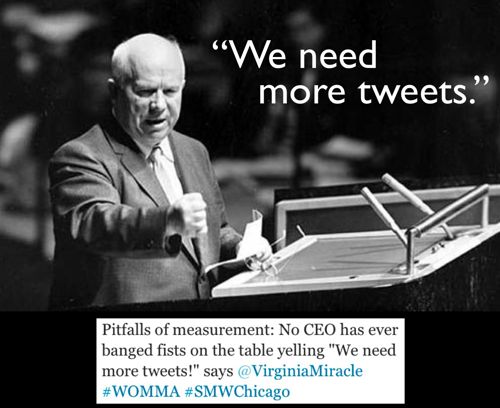
On a panel last week for a WOMMA event at Chicago’s Social Media Week, I had the pleasure of sitting with Keller Fay’s Ed Keller, Brains on Fire’s Robbin Phillips, and Social Media Today’s Robin Carey to discuss social media measurement under the heading of “Is WOM worth it?”. In the context of that discussion, I talked about the siren song of social media counting (vs. measurement) and the trap that we too-frequently see: social media “cases” that end by rattling off 20 different social media metrics that do not track to a meaningful business metric. To illustrate, I mentioned that no CEO is not banging the table looking for more tweets (which BrandAutopsy riffed into the above), he’s looking for shareholder value – sales, market share, preference, purchase intent and a legion of other measures that can not be ripped off the back of Facebook insights.
So, with that in mind and the voices of my esteemed co-presenters in my head, I put together a list of 4 potential measurement pitfalls that can kill your social media measurement program before the horses have left the stable:
1) Setting the wrong objectives. This sounds silly, but often an activity or “client brief” will be mis-translated as an objective. For example, “run a high-impact event” is an activity, but “increase consideration and share of voice among X audience” attending that event is an objective. TEST: Can it be measured? If the answer is no, it isn’t an objective.
2) Determine the meaningful (vs. diagnostic) KPIs before you begin: Chances are, meaningful KPI’s will require measurement techniques beyond simple, spoon-fed social media metrics like likes and shares. Take a walk through our Conversation Impact(TM) white paper to determine how to craft meaningful Reach, Preference, or Action KPIs.
3) Find where your audience is interacting on a relevant topic: Yes, Facebook has 800 million people and likely some of them are in your desired “audience” but they may not be on Facebook to discuss their mother’s prescriptions or whatever topic that you may have value to add. The important second step to “going where the party” is already happening is not just determining where your audience is, but how they are using social media for different things – where do they share recipes vs. look for snowboot recommendations? While they could light up for FB, Twitter, Flickr, etc it will be critical to understand the relevance of those platforms to their lives to put together a measurable strategy.
4) Plan to measure: If you put together a measurement plan after you’ve already begun, you have lost your chance at a baseline and being able to know the true impact of your efforts. Ed Keller admitted that he often gets calls halfway through campaigns at which point, there are limitations on the types of measurements that can be taken. The baseline is going to be the key to your “winning” metric such as “Increased purchase consideration by 45%”. That is the type of metric that CEOs do care about and will keep your social media efforts on strategy and in budget in 2012.
This week I participated in a Social Media Week New York panel “Putting the Social in CSR” along with Bonin Bough from Pepsico, Deb Berman from Just Means, and Chrysi Philalithes from (RED). Its an extremely timely topic and one we have been thinking a lot about from a number of different angles. The great news? Social media provides the media for corporations to leverage their Corporate Social Responsibility investments to yield greater fruit for both the customer and the beneficiary.
The time-worn model of CSR of “Purchase X and we’ll contribute to Y up to $Z amount” can leave all parties feeling a little empty. Consumers know the company has already earmarked the money for the cause and is now trying to blackmail us into unlocking it by picking their brand over the equivalent. That similarly does little for the cause beyond the actual money donated – there’s little room on a package to tell the charity’s story and there’s no way for the consumer to choose to become more involved. To paraphrase John & Yoko, “EMPTY CSR IS OVER if you want it”.
Social media allows for the type of participation that can provide better return on CSR investments to all. Just a few:
* Connecting Customer and Cause – Activating around a CSR commitment in social spaces allows the customer to choose to go a step beyond just the purchase for token donation to donating themselves, connecting to the cause’s social space or promoting the cause to there social nets.
* Inspiring Meaningful Involvement – Social media allows companies to set up infrastructure for their customers to be the connection that makes the biggest difference. For example, Time Warner Cable (Disclosure: Ogilvy client, but we are not responsible for CSR), has made a 5-year $100MM commitment to Science, Technology, Engineering and Math through their Connect a Million Minds initative. They are measuring success not with number of $$ donated, but number of minds connected – a function not of their donation, but the number of people they have inspired & empowered to take advantage of the infrastructure they have created.
* Platform for Awareness & Promotion The much publicized Pepsi Refresh Project is taking a huge step in CSR – providing $20 million in grants to individuals and small organizations with good ideas to improve their local communities. Pepsi provides a platform to tell your story, promote your idea, and is doling out 32 grants per month to the democratically selected winners. The impact for these causes will go far beyond a microscopic logo on a box.
To reference Ann Charles’ Mashable piece on CSR 2.0, the new way to look at CSR is the “triple bottom line of people, planet and profit”. Maybe social media adds a fourth P – participation – that could be a goal in itself. Participation benefits the brand, beneficiary, and consumer alike and will fuel the type of CSR that will hopefully increase the efforts and investments of corporations in some of society’s most serious challenges.
In 10 days, I am attending my very first TED. As if I were not already excited, they have just released a new feature on their website that uses a “secret algorithm” to provide attendees with a Top 10 list of matches of attendees you should connect with.
In general, the thought of another “social network”, another login and password, or another place on the internet to have to go and do things stresses me out. This is different – the specificity of the information and the mystery algorithm’s potential to find someone with who I am intellectually sympatico turned me into an instant addict. It’s less MySpace and more of a nerdy, bleeding heart, semi-celebrity eHarmony. I have already exchanged emails with one of my “matches”.
The timing of this is genius – I am looking forward to this year’s event even more and feel like I already have an agenda of kindred spirits to meet. Simultaneously, they have opened registration for next year’s TED 2011. So, lessons?
– TED is the master of optimizing the full year – not just an event, but the lead up to and the follow up after. Each is a moment for meaningful engagement
– Amazon-like connection suggestions – By collecting so much information from me, TED was able to offer me truly tailored “matches”. Many events offer you a list of who is attending and offer you the chance to make a connection, but this is the first time that I’ve had a truly relevant list presented to me.
– Facilitate Sparking Personal Relationships – Beyond the phenomenal lineup of speakers, the appeal of the event is belonging to the community of “TEDsters” and there’s no better way to integrate a new member than to empower them to start Day 1 with live connections.
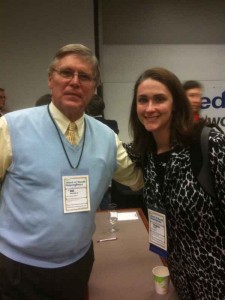
Last month, I met Bill Samuels, Jr. in the flesh. That name may not ring a bell for you, but for me and thousands of Maker’s Mark ambassadors, meeting the master distiller, current company president, and son of the founder of a truly beloved brand is a very big deal. Perhaps more importantly to me, this company’s philosophy and deep respect for their customers was one of the first to get me excited about the power of Word of Mouth Marketing when I heard Jackie Huba tell their ambassador story (check out her podcast interview with Bill Samuels, Jr here) almost 5 years ago.
What better way to kick off 2010 than remembering why we care about WOM in the first place from a brand that is most certainly worthy of a weekend (or a 6 year ambassadorship)? Thus, enjoy the paraphrased quotes from Bill Samuels, Jr – some of which originated with from his dad. I hope they can inspire us all to a 2010 of meaningful marketing resolutions…
<our target audience is…>Anyone with an above average interest in taste and taste distinctiveness that we would enjoy having home for dinner.
<how will we reach them?> We will not enter the airspace of anyone who has not invited us to enter it.
We will talk to the people who want to talk to us.
Wherever we travel, we blow the whistle at 5 and they all come running.
We send Ambassadors text emails from Bill, because your friends don’t send you Flash emails.
Surprise and delight is more powerful than a reward triggered by taking an action.
Every gift we send is a tool to help you introduce your friends to your brand, Maker’s Mark.
Thanks for the reminders, Bill. And for the reminder to specify brands when ordering a bourbon & ginger.
 ** Cross posted on
 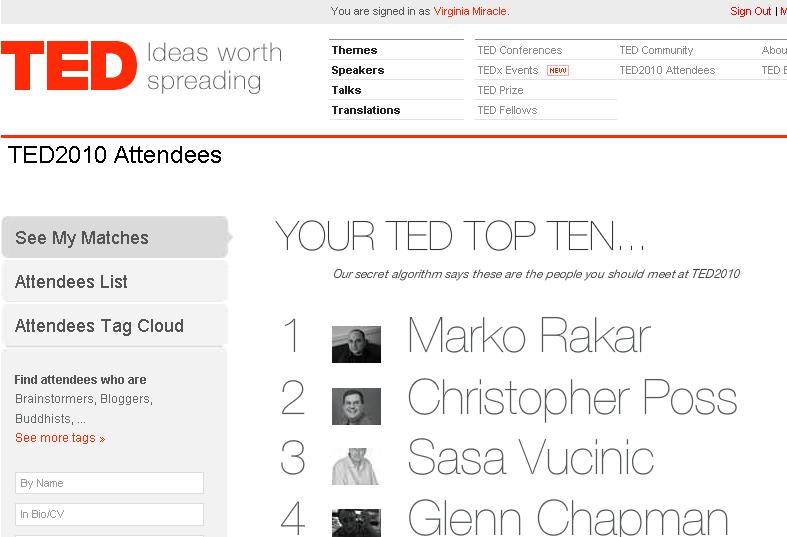 In 10 days, I am attending my very first TED. As if I were not already excited, they have just released a new feature on their website that uses a “secret algorithm” to provide attendees with a Top 10 list of matches of attendees you should connect with.
 <our target audience is…> Anyone with an above average interest in taste and taste distinctiveness that we would enjoy having home for dinner.