Archive

Archive for the ‘Integrated Marketing’ Category

Authority vs. Influence

January 9th, 2009 4 comments

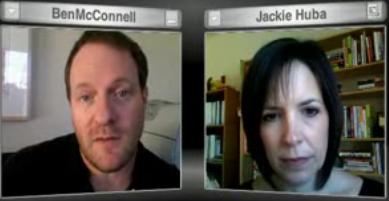
Spurred on by a post from Mack Collier, Jackie Huba and Ben McConnell posted an interesting vlog post yesterday on the idea of authority.  I believe this concept of obsessively counting Twitter followers is the idea that touches off this debate.  For example, if you have 25.000, does that mean you are an authority?  I think Mack, Jackie, Ben and many other are all agreed that the answer is no.  Alone, Twitter followers doesn’t even necessarily mean you have great influence, it is only a  base brute measure of “reach” (you could also add in reach of the RTs for total reach) in the same way that media has measured reach for years.

There are some other interesting nuggets in the Ben/Jackie interplay in that video that piqued my interest.

Does a book indicate authority?: When Perez Hilton comes up, they reconsider whether or not he may be an “Authority” when the fact that he has a new book up gets mentioned.  Initially I chuckled at the idea of having a book giving you street cred in the church’s eyes, but then I reconsidered.  Writing a book usually indicates that the author has done a huge amount of research into a particular topic and (often) has some personal experience or connection to the topic that gives them further credibility.

Are authority and influence the same thing?: Jackie asks this as “Are the things that you say retweeted?” Ben by positing that “You are an authority if you have people who take your word and take action”.  I think both of these are less about authority and more about influence.   From the wikipedia entry on this authority: “What distinguishes authority, from coercion, force and power on the one hand and leadership, persuasion and influence on the other hand, is legitimacy.”  I do think that its possible for an authority to not have a large group of people listening to them.  Similarly many people can take action on what Britney Spears telegraphs, but I’m not sure this makes her an authority at anything other than influence.

Have online celebrities convinced themselves they are real celebrities? Ben and Jackie included some fun Twitterati mentions of folks that I really enjoy who really are caught up in their follower count.  Stay tuned for G4′s “Twitterati: Where are they now” series in 2014.

Thanks to Ben & Jackie for the inspiration this morning!

Corporate Blogs: Sucking or Progressing?

December 11th, 2008 No comments

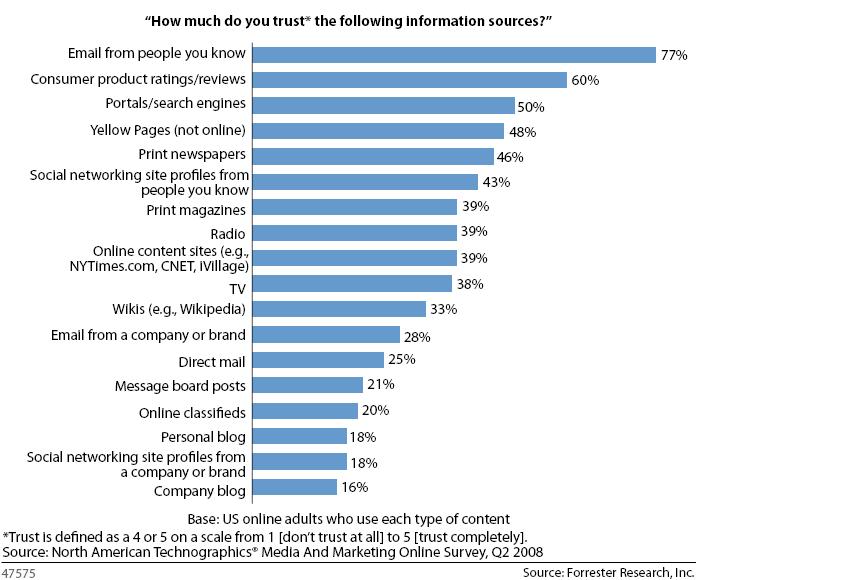
Sparked by a recent Forrester report that corporate blogs are one of the least trusted forms of media, much has been written on the topic of corp comms in the last few days.  Here’s the chart that launched this dicussion

As this discussion is going on, Rome is burning (economically speaking).  This offers corporate blogs an amazing opportunity to use their platforms for good, not evil, and some art stepping up to the plate in a significant way.

I detailed some examples in a post yesterday to the Ogilvy 360 Digital Influence blog.  Meanwhile, my Ogilvy colleague and blogger extraordinaire was also fanning the flames over at the Influential Marketing Blog.

What do you think?  Is the Forrester-reported suckage real?  Or does the transparent social media treatment of recent unfortunate events change your mind about their value the way it has mine?

Have You Heard The Story of Rody?

September 14th, 2008 No comments

On a recent trip to Austin, my family paid a visit to my favorite toy store on the planet – Toy Joy on 29th & Guadelupe.  While I have been making excuses to frequent Toy Joy for almost a decide, I feel totally justified shopping there now I have an actual child for whom to buy toys!

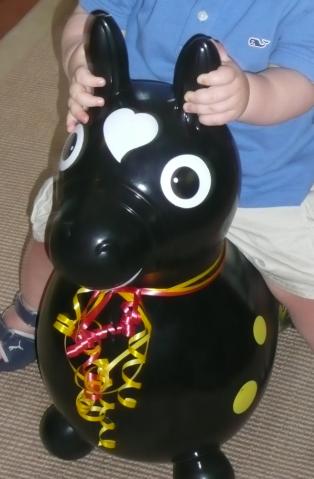
When we walked in, baby in tow, we saw a row of brightly colored blow-up…somethings – burros? ponies?  It wasn’t clear.  We were staring at them quizzically when one of Toy Joy’s incredible helpful sales staff directly asked us “Would you like to hear the story of Rody?”  Who doesn’t love a great story?  Here is what she told us.Hello, My Name is Rody

  • Rody is made in Italy (subtext: not China).
  • The company that makes Rody ONLY makes the Rody – it is their specialty.
  • Rody is safe for small children but can be inflated further as the child grows – safe to 400 lbs.
  • They keep one of the store models a little more inflated so the adult staff can play.

By the time she got to her last point, 2 things had happened:

  1. The saleswoman had mounted a blue Rody and was happily bouncing away.
  2. I was whipping out my credit card convinced I would be depriving my child if he did not have one of these to play with on his first birthday.

When was the last time a salesperson told YOU a great story?  Did you buy?

Storm Preparedness: Another Take on the Power of Community

September 1st, 2008 No comments

Last week I had the pleasure of joining the Federal Alliance for Safe Homes (FLASH) for their annual conference in Orlando, FL.  Little did they know when the conference was scheduled, a huge opportunity for national communications about storm preparedness would be headed to the Gulf Coast just as the conference would be taking place. I was very impressed with FLASH’s surround sound approach to the influences on whether or not a community is prepared when a storm hits.  Included on the speaking docket were:

  • TV meteorologists and severe weather experts who largely control how the mass media carries messages about weather and preparedness
  • local officials who most directly deal with the aftermath when communities are not prepared for a storm
  • insurance executives who can encourage preparedness through discounts for those who “harden” their homes
  • contractors who can influence their clients electing storm safe materials instead of chosing minimum building code standards
  • legislators who want to encourage private markets to solve the preparedness problem so it does not become public debt
  • home inspectors who can be trained to identify building weaknesses that would be vilnerable in the case of a storm
  • a Disney Imagineer who encouraged us to think differently because, in a world where Al Gore can win an Oscar for a Powerpoint presentation, preparedness could be made cool too.  He has put his money where his mouth is by guiding FLASH’s creation of an Epcot experience illustrating the difference that fortifying a home can make called StormStruck.

If you are anything like me, you are probably thinking that I, with zero storm experience, was not qualified to join the above cast of characters.  Technically, you’re right.  It was, however, a great opportunity to discuss the role that social media can play in promoting preparedness.  If a parrot dancing to the Backstreet Boys can “go viral”, why can’t the concept that your neighbor’s backyard junk can become a missile of airborne debris headed straight for your windows in a storm? Preparedness is not an every-man-for-himself game.  There is power in communities and neighborhoods preparing together- be it a storm, a terrorist attack or a viral epidemic.  But what role could social media play?  Some starter ideas:

  • Empower communities with wikis that will indicate what homes have been fortified for storms and visualize the % to goal on a neighborhood basis.  This type of accountability could add some positive social norm pressure to the goal of building strong homes.
  • Allow for those in hurricane prone regions to share referrals on contractors who are certified to build new or to bring existing home up to fortified “Code Plus” standards.  Customers should be able to include their personal experiences with hose contractors.
  • Before a storm strikes, encourage your local community to get organized via mobile so that you know how to get updates on the status of your immediate neighborhood even while you are evacuated.
  • Identify and organize a single day (before hurricane season) around which to discuss Storm Preparedness that could be recognized on an annual basis.  Create widgets that include instructions on assembling an on hand storm kit and the steps to fortifying your home.  These could be distributed through the websites of local TV stations and then added to social networking profiles or blogs of those who care about preparing their community.

Other thoughts on new idea or best practices?  How do you think social media could power storm or any other type of preparedness?

Categories: Integrated Marketing Tags: ,

Playboy’s Rogue Brand Ambassador

August 14th, 2008 4 comments

KendraYesterday’s WSJ contained a front page story detailing the Olive Garden’s unusual challenge of figuring out how to handle the repeated, vocal endorsements of Kendra Wilkinson. As a playmate, Hef girlfriend, star of E!’s Girls Next Door, and “friend” of 730k+ on MySpace, Ms. Wilkinson has a considerable platform for her declarations of Olive Garden love regardless of the feelings the family-friendly brand may have about her.

The core question posed in this situation is what do you do if you find yourself with a brand ambassador that in no way matches the brand “persona” imagined in the board room? What if they do not reflect the brand’s core values? What if they aren’t even using the product in the way you imagined or marketed it? As the article repeats, this is a complicated issue, but I think there are a few steps to walk through when any unexpected brand ambassador shows himself – whether or not they match your ideal target.

Stage 1: Acceptance. Per the solid advice of WOMMA board member Dave Balter, the first thing to do is accept that this is going on and it can’t be stopped. The quicker you can pass through this stage, the quicker you can get to the good stuff.

Stage 2: Opprtunity Identification. Maybe this isn’t your dream spokesperson, but is there an opportunity here? While there are sure to be pros and cons, why not explore? Does the appearance of a new ambassador mean that there are additional untapped market segments for the brand? Could you engage these new segments without compromising your values or offending your core audience?

Stage 3: Reimagine Success. Chances are that there is an engagement option somewhere between ignoring and embracing the rogue ambassador where the pros outweigh the cons for the brand. Success may not be what you envisioned at the company retreat, but the rogue brand ambassador could show you the promise of a different reality that might have higher revenues and more word of mouth surrounding it.

How would the pros and cons weigh out for inviting Kendra to design her own chicken parm-based entree? Offering to shut down the place to host her birthday? Or simply inviting her on a tour of the test kitchens to be taped for the show? Maybe some old fashioned “hospitaliano” could go a long way.

But the REAL question is, what am I doing with my life when Kendra Wilkinson has her own WSJ etching on page 1?

*cross posted from the Ogilvy PR 360 DI blog*