Month: November 2008

Entrepreneurs: Find Your First Talkers

Entrepreneurs: Find Your First Talkers

The economy may be down, but the entrepreneurial spirit is in full bloom.  Recently, I had the pleasure to catch up with 2 former colleagues in the midst of amping up their online businesses.  After both conversations, I realized that the first step in WOMM is different for new vs. established businesses.

The first T in Andy Sernovitz’ 5T framework (a worksheet for which can be found here) is Talkers.  Who is going to spread the word about you?  An established brand can do research to determine who is already talking, analyze what they organically talk about and use that as a good starting point for a word of mouth marketing program.  A new company, however, does not have that luxury.

New Site/Service Step 1: Identify which micro-audience will derive the most value from the differentiation of your offering. They will be your talkers.  They can be your beta testers and your product development focus group and your conscience as you make decisions about the business.

The challenge?  Like minoxidil that was designed for high blood pressure and now treats baldness or Dr. Martens shoes that were designed as gardening shoes for the elderly and became a symbol of the punk movement, sometimes your most valuable talkers are not the ones your originally had in mind when you went into business.  Here are some thoughts on finding them:

  1. Family & Friends – Ask family and friends (real and Facebook) to test the site, provide you some feedback, and suggest what THEY think the value of the site is and what the ultimate user profile would be.
  2. Research, ID and start to follow bloggers in all of the different profiles/specialties that your family and friends think might be your ultimate users to gain insights into their needs and desires.
  3. Ask a handful of bloggers to check out what you’re building and provide you with some feedback on your beta.
  4. Gauge which segment has the most significant need/value from your offering and prioritize their development requirements.
  5. Develop new features, and repeat from step 3.

As promised Sunday, this was the gist of my feedback for Recipecomparison.com.  What else do you tell the entrepreneurs who seek WOMM advice from you?  Do you have any other thoughts for this site in particular?
Recipe Comparison WOM Advice?

Recipe Comparison WOM Advice?

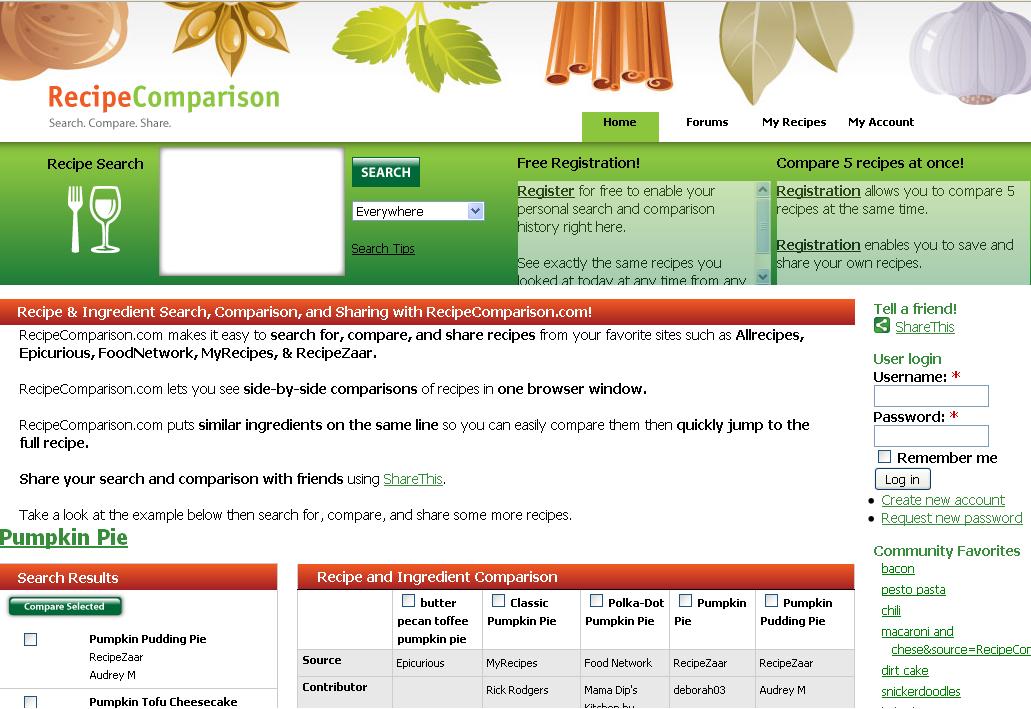
A friend and former colleague of mine has started a night and weekend passion project called RecipeComparison.

Recipe Comparison Header

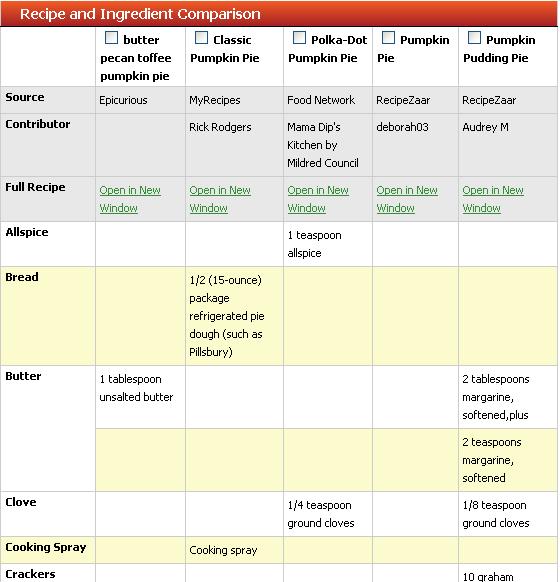
In a nutshell, the site allows you to “search for, compare, and share recipes” from popular recipe clearinghouse sites.  The comparison is unique.  It is a side by side look – allowing you to compare amounts and varieties by type of ingredient – like you would comparison shop for appliances or cars.

Close up comparison

So…what audience is going to find this feature the most valuable?  As a non-foodie, it is very easy for me to see the value beyond folks who spend hours trying to make sure they are optimizing their pumpkin pie recipes (in all honesty, I actually HAVE gone through this process to find the ultimate macaroni & cheese recipe and it was pretty painful without this tool).   What about people trying to lose weight and find lighter versions of their favorites?  Or heads of household who are cooking for families with food allergies who need to make substitutes?

What would your advice be to the founders of RecipeComparison.com on how to get the word out about the site and its unique features (others include being able to keep a record of searches cross-recipe sites)?  Where would you start?

On Wednesday, I’ll post the advice that I gave to the founders, but in the meantime, I know they would appreciate collecting ALL the best practices and suggestions they can.  Bring it on!

I came, I SWOM, I learned something

I came, I SWOM, I learned something

CoBrandit's Owen Mack as Pee Wee HermanSWOMFest was a blast from the 80’s themed preparty to Thriller dance recreation kickoff to the final case workshop.   Because of the extremely varied crowd that included authors, practitioners, and WOM newbies, my guess is that SWOMFest was a bit like a rorschach test with everyone taking away a little something different.

That being said, what follows are my takeaways from the event:

Six Sigma is the enemy of Word of Mouth. In Ben McConnell’s surprisingly practical kickoff presentation, he framed the reality that Word of Mouth is generated by radical value propositions – not incremental ones. Citing Zappos radical value proposition of removing any risk from purchasing shoes online, he noted that 10% cleaner, 50% faster, 20% cheaper, etc are value propositions that will never drive organic discussion or advocacy. For example, if someone were to now offer free OVERNIGHT shipping both ways on shoes instead of just free shipping, that incremental improvement would not be likely to drive a lot of WOM or out-Zappos Zappos. He did caveat that for manufacturing and surgery, Six Sigma is still a very important concept.

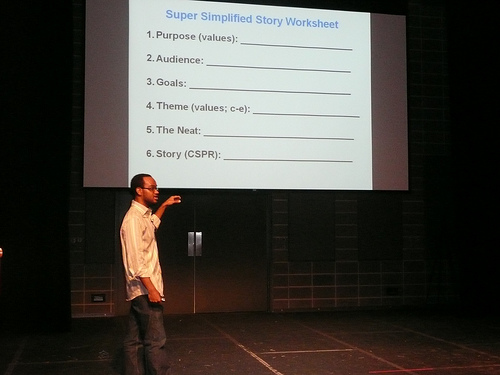
Storytelling may be the hardest element of WOM to master – I have to give screenwriter Yaphet Smith the prize for the best mindbending presentation of the day. I wasn’t sure why he would be on the agenda at such event, but he captivated newbies and crusty WOM pundits alike and challenged them to think about their stories in a structured way, while remembering that “seeking the Neat” is a part of that structure.

Even Credit Unions can be interesting. If you don’t believe me, check out TDECU’s Young & Free Texas competition here or Trey Reeme ongoing battle to Thwart Mediocrity.

WOM is in the small stuff. The setting (the Long Center in Austin, TX), the events, the food, the swag, the music (DJ Mel), and the audience were as important as the speakers. Some of my most interesting conversations was with a marketer whose mission is to bring young adults back to the catholic church.  Very different from my day to day work, but a fascinating challenge.

Everyone in Word of Mouth Marketing loves sharing ideas with entrepreneurs. I was a little grumpy at the idea of a case study breakout – sometimes they are frighteningly painful.  This one was amazing. The entrepreneur in question, Jacob Boone of local organic smoothie/frozen yogurt trailer Mamboberry, benefited from the enthusiasm of the crowd for his business.  Blue Avocado also traded their stylish, collapsible sustainable grocery bags for WOM ideas and a lot of Austin style love.

Click here for the rest of my pics from SWOMfest

Click here for all pics from SWOMfest

Click here for all of the Twitter coverage of the event